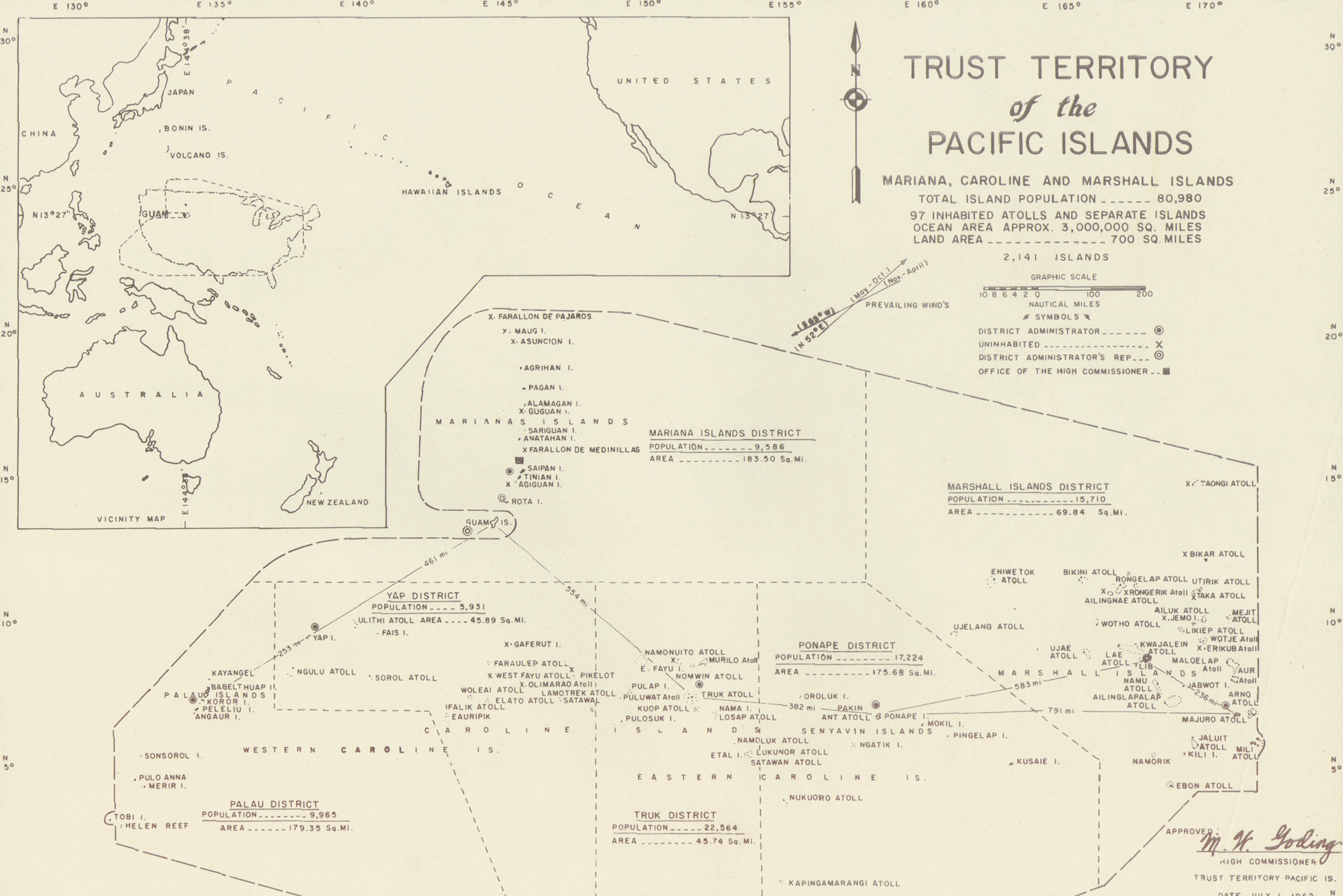
Citizens of the three independent nations that have signed Compacts of Free Association (COFAs) with the United States – Palau, the Marshall Islands and Federated States of Micronesia – can and do serve in the U.S. military but have never been eligible for U.S. veterans health services.
That changed in March of 2024, when Congress passed a law authorizing the United States Department of Veterans Affairs (VA) to provide healthcare to U.S. veterans in the COFA nations even though they are not U.S. citizens. Services are not immediate. The VA must first reach agreements with each country on the details of how they will provide the care. As a result, U.S. military veterans living in the freely associated states still lack access to VA health services, and they will lack U.S. healthcare benefits for the foreseeable future.
The Veterans Administration provides health services to veterans in all the states and territories, but have not provided these services to the U.S. veterans living in the freely associated states (FAS). While these FAS veterans can receive medical care if they travel to a U.S. state or territory, or even to Canada or the Philippines, there are no VA services in the Republic of the Marshall Islands, Palau, or the Federated States of Micronesia because they are foreign countries.
Freely Associated State Ambassadors Urge Swift Action
In testimony before the House National Resources Committee on September 10, 2024, the ambassadors of the three COFA nations urged Congress to implement the VA health services law quickly.
As Ambassador Jackson Soram of the Federated States of Micronesia explained, “Unfortunately, we are disappointed by the lack of engagement from the Department of Veterans Affairs (VA). The COFA Amendments Act establishes a one- year period following the enactment of the Act during which the VA is directed to work with the FAS governments to assess options for the required delivery of care to veterans residing in the FAS. We are very concerned that six months have elapsed without progress on these initiatives, which are so critical to the health of our veterans. The FSM government stands ready to be of any assistance necessary.”
“The package meets needs regarding the Marshall Islands more than ever before, greatly improving and strengthening the association between our nations, ours formerly part of a territory that yours administered but is now a sovereign state non-bindingly associated with yours,” added Charles Paul, Ambassador of the Marshall Islands. “There are still agreements being negotiated, including a new agreement for certain U.S. services that we hope will be completed soon this month and an agreement that would enable our U.S. military veterans to receive veterans’ healthcare in our islands or travel for care instead of having to live in the U.S., Canada, or the Philippines.”
Ambassador Hersey Kyota of Palau said, “We now look forward to the Department of Veteran Affairs’ draft agreement for the healthcare that U.S. military veterans living in the freely associated states are entitled to under your law. Many veterans have not returned and contributed to our islands because they have had to live in the U.S., the Philippines, or Canada to receive this care.”
U.S. Department of Veterans Affairs Pledges Support
At the same Congressional hearing, Miguel Lapuz, a Special Advisor at the U.S. Department for Veterans Affairs (VA), testified that the VA “is fully committed to ensuring that U.S. Veterans in the FAS have access to hospital care, medical services, and beneficiary travel benefits. While we finalize next steps toward implementation, eligible Veterans in the FAS can enroll for VA health care [online] and continue receiving VA health care at VA medical facilities in the U.S. (including Guam) or in the FAS through the Foreign Medical Program (if eligible). Eligible Veterans can also access other VA services, including disability benefits, educational assistance, and pension services.”
Lapuz predicted that the current study phase of VA health services would last until the end of the year, to be followed by action.
Free Association Status for Puerto Rico?
One of the possible political status options for Puerto Rico is independence with a Compact of Free Association. While some supporters of this option claim that free association is a separate “best of both worlds” status option, the current COFA nations are all — as the Ambassador from the Marshall Islands emphasized — sovereign nations non-bindingly associated with the United States.
All three benefit from their association with the United States but under very limited terms, as evidence by the continued absence of veterans health services to COFA citizens who served in the U.S. armed forces. Meanwhile, the United States receives, in the words of hearing witness Anka Lee, Deputy Assistant Secretary of Defense for East Asia Policy, U.S. Defense Department, “assured access guaranteed by the Compacts…for bilateral and multilateral [military] training and exercises.” The United States has free rein to establish military forces in the COFA states and to make defense decisions for these nations – rights that seem out of balance as long as COFA citizens are denied access to veterans health care services.
Supporters of “sovereign free association” with the United States for Puerto Rico may hope that Puerto Rico’s relationship with the United States could be substantially different from U.S. relationships of the current FAS nations but there is no evidence to support this claim. As the hearing last week showed, there is established precedent of how any potential future Freely Associated State may expect to be treated under U.S. law, and health care access for U.S. veterans may not be part of the deal.