Puerto Rico is sometimes described as a “territory,” a “country,” a “nation,” a “colony,” an “archipelago,” an “island area,” a “possession,” or a “commonwealth.” A quick glance at sentences beginning with “Puerto Rico is…” shows all of these and more.

Foreign news sources sometimes say that Puerto Rico is “a self-governing commonwealth associated with the United States.” We see this especially in British sources, since Great Britain has a Commonwealth with independent Commonwealth nations. However, the term “commonwealth” is essentially meaningless in the United States, where several states and a couple of territories use the “commonwealth” label in their official titles, with no effect on their political status.
Government usage
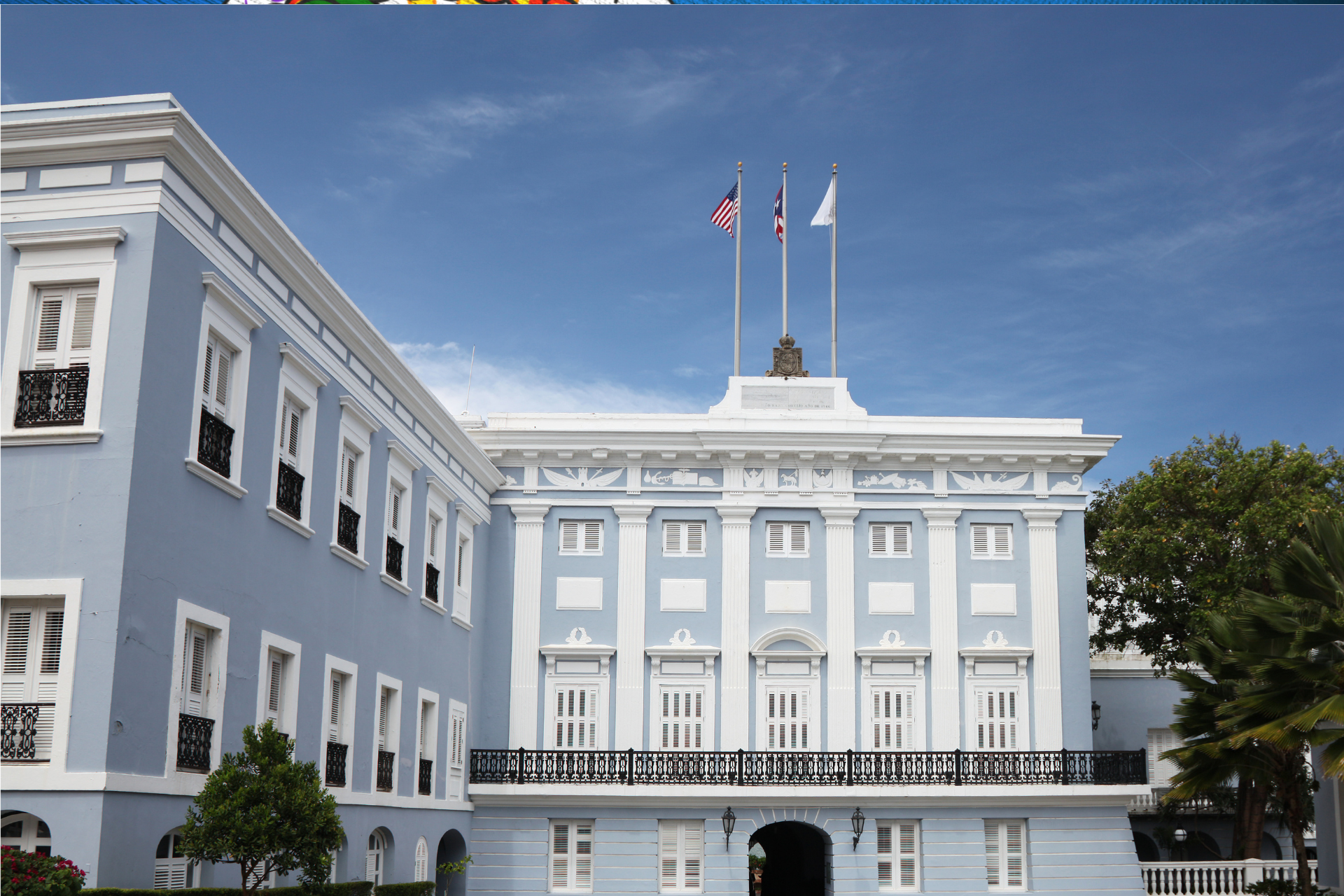
According to the federal government, in thousands of official documents, Puerto Rico is an unincorporated territory of the United States, subject to the Territorial Clause of the Constitution.
The official website of the government of Puerto Rico refers to Puerto Rico as “an unincorporated territory of the United States of America.”
It is not a state, nor is it a country. It is not a “commonwealth,” even though it uses the word in its official name.
“Possession” is technically correct. Congress used to refer to Puerto Rico as a “possession” in the laws that it passed, but this term has fallen out of favor.
The Department of State’s website features a 1952 letter from the then-Secretary of Interior Northrop to State indicating that “with the establishment of the Commonwealth of Puerto Rico on July 25, 1952, the people of Puerto Rico have attained a full measure of self-government, consistent with Puerto Rico’s status as a territory of the United States.”
In other words, the “Commonwealth” label inspired by Puerto Rico’s 1952 local constitution did not change its territorial status.
Geographically speaking, Puerto Rico is an island and also an archipelago, or group of islands, as well as part of the Lesser Antilles, itself also an archipelago. Government documents use all of these terms. Foreign governments also sometimes specify that Puerto Rico is part of the West Indies.
What’s grammatically correct?
The AP Stylebook says that “Puerto Rico” must not be abbreviated in text; the “P.R.” abbreviation is appropriate only in a dateline. The AP Stylebook is also explicitly clear that Puerto Rico is a territory and calls for writers to use “the territory” in referring to Puerto Rico. Other major style guides concur.
The Global Press disagrees. They suggest that people use “Puerto Rico” every time they refer to the Island. “Commonwealth” is outmoded, they say, and “island” is not factual because the territory of Puerto Rico includes more than one island. They also reject “territory” on the grounds that this term and “commonwealth” are “not clear and are often rejected by Puerto Ricans.”
What do people actually say?
In Puerto Rico, people often write, “the Island.” Like using “the City” for San Francisco or Manhattan, this usage is not always familiar or understandable to people from other places.
“PR” is also used, and recommended by Wikipedia for “Puerto Rico” — but it is more widely used for “press release” and “public relations,” so it is again likely to be confusing. There is no universally recognized abbreviation for “Puerto Rico.”
“Borikén” or “Borinquen” was the original name of the Island, and these terms are sometimes used in place of “Puerto Rico.” Doing so creates the insider/outsider split caused by using jargon: people in the know will understand what is meant, and outsiders will not.