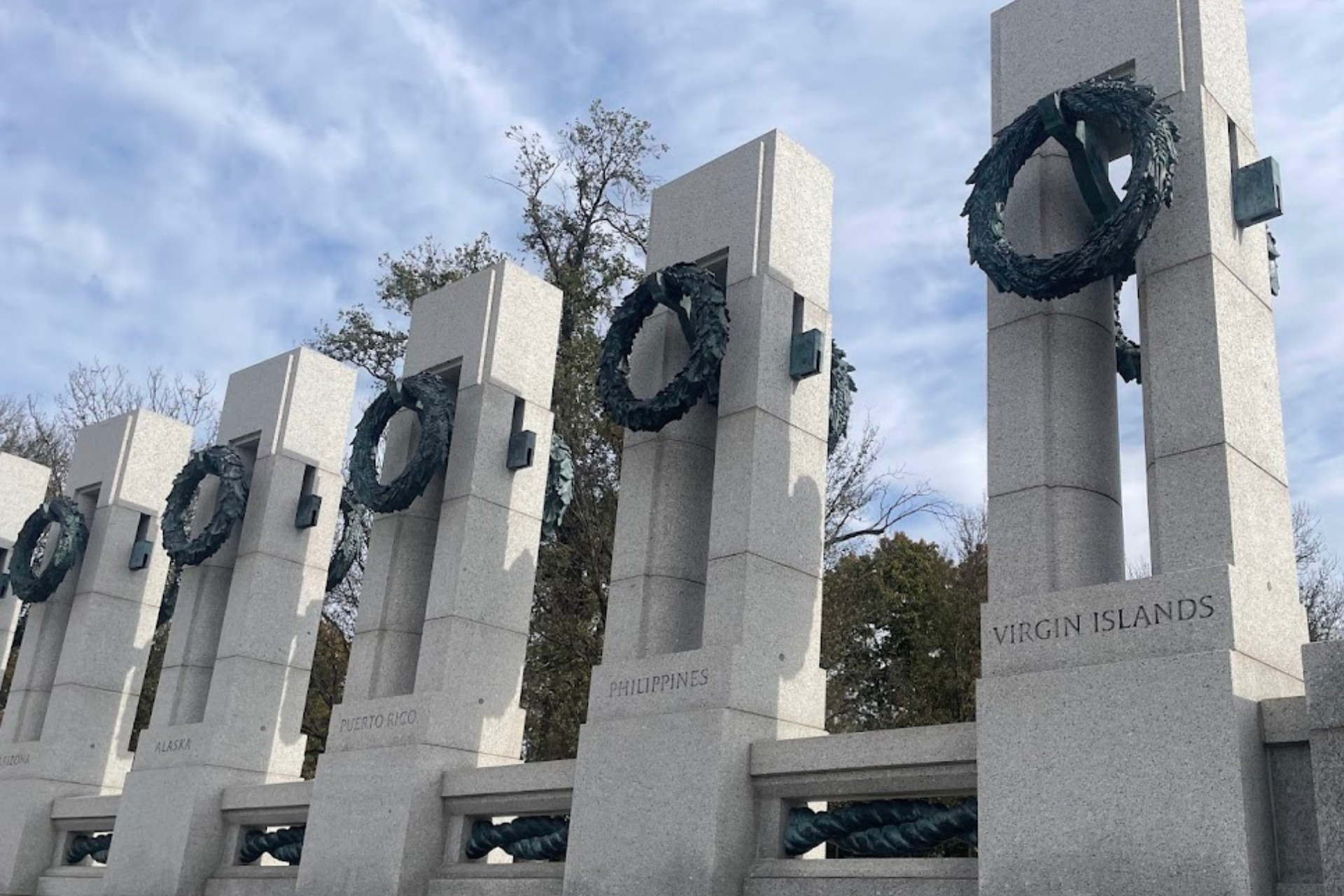
Puerto Rico, a territory of the United States, has its own local government with two Island-wide positions: Governor and Resident Commissioner. The Resident Commissioner is Puerto Rico’s sole representative in Congress. Both offices have four-year terms.
The current Governor of Puerto Rico, Pedro Pierluisi, is a Democrat. The current Resident Commissioner, Jenniffer Gonzalez-Colon, is a Republican. Both are members of Puerto Rico’s statehood political party, referred to as the New Progressive Party, or Partido Nuevo Progresista (PNP) in Spanish.
So is Puerto Rico Democratic or Republican?
Voters Pick Both Democrats and Republicans at the Polls
Gonzalez-Colon, the Republican Resident Commissioner, just won the election to be the next Governor of Puerto Rico. Pablo Jose Hernandez, a Democrat, was elected as Resident Commissioner. So the two main leaders of Puerto Rico are once again a split ticket when it comes to the national political parties.
The two diverse teams – Gonzalez/Pierluisi and now Gonzelez/Hernandez – demonstrate that Puerto Rico is not only willing to elect both Democrats and Republicans, but that the internal parties of the territory do not have a lock on voters’ loyalty on any given election. Voters commonly vote for both a Democrat and a Republican on a single ballot.
Ds and Rs: Ideologically in Sync
Although the current governor and resident commissioner are both members of the PNP, Hernandez is a member of the PDP, or “commonwealth” party. He is also the editor of Rafael Hernández Colón’s Hacia la meta final: El Nuevo Pacto and Estado Libre Asociado: Naturaleza y Desarrollo, or, in English, Toward the Final Goal: The New Pact and Commonwealth Status: Nature and Development. This book argues in favor of a “New Pact” that was proposed for Puerto Rico to guide U.S. relations in the 1970s, reminiscent of the “enhanced commonwealth” idea. A more recent version of the “Pact” was developed in 2020, with much the same terms and language.
In 2024, Senator Roger Wicker (R-MS) introduced a version of the Puerto Rico Status Act that included a “commonwealth” ballot option consistent with Hernandez’s position. The “commonwealth” plan has been soundly rejected by members of both U.S. political parties in the House, Senate and White House since it was first proposed in the 1950s, but the senior Republican Senator from Mississippi and incoming freshman Democrat from Puerto Rico have found common ground in support for it.
“As I said throughout the campaign,” Hernandez told the San Juan Star, “I do not recognize the validity of [the] plebiscite because it is not binding and because it did not include the option of maintaining and improving the Free Associated State.”
“Free Associated State” is a translation of “Estado Libre Asociado de Puerto Rico,” the official name of the territory of Puerto Rico. So Hernandez is essentially saying is opposed to the November 5 status vote because the ballot omitted the option of “territory,” which is informally referred to as a “commonwealth,” a label with no legal significance. The biggest twist with this portrayal of Hernandez’s position is that Hernandez is not actually in favor of the status quo; he is in support of an enhanced “commonwealth.” The Hernandez position is in alignment with that of Sen. Roger Wicker, a Republican from Mississippi, who introduced legislation that called for a status referendum in Puerto with an enhanced “commonwealth” on the ballot as an option for voters.
On the island, some voters use the Spanish term for “Free Associated State” to describe Puerto Rico’s current territorial (or “commonwealth”) status, but “Estado Libre Asociado” also sounds a lot like the independent, freely associated states in the Pacific Ocean of Palau, the Marshall Islands and Federated States of Micronesia. These three countries used to be territories administered by the U.S.
Regardless, the incoming Democrat from Puerto Rico and seasoned Republican from Mississippi are in agreement that some type of status quo option should be on the ballot, and by that they mean “”Estado Libre Asociado” – which technically indicates Puerto Rico as a U.S. territory, but is frequently misunderstood by voters to mean a fantasy “enhanced commonwealth” or independent freely associated state.
Democratic or Republican?
In a symbolic vote for the President of the United States, Puerto Rico chose Kamala Harris, the Democratic candidate with roughly 75% of the vote. Yet this result cannot be interpreted to mean that Puerto Rican voters are a monolith and never inclined to vote Republican. After all, mainland Puerto Ricans, some of whom voted for statehood with their feet not that long ago, gravitated towards the Republican candidate notwithstanding an opening comic referring to Puerto Rico as “garbage” at a mass rally just days before the vote. With a little campaigning on the island, the 25% support for Trump does not appear to be a ceiling.
But the clearest indication that the Puerto Rican vote is up for grabs for either national party is the local election itself. The Republican Resident Commissioner is now slated to be Governor. She will work in partnership with the prominent Democrat Resident Commissioner. This bipartisan dynamic has been going on for years, and is likely to continue in the future.