Senate Republicans are reportedly considering voting on legislation that would ensure continued nutrition benefits for millions of low-income Americans under the federal supplemental nutrition assistance program (SNAP).
The two-page bill by Senator Josh Hawley (R-MO) does not provide similar resources for Puerto Rico’s unique Nutrition Assistance Program.
The “Keep SNAP Funded Act of 2025,” introduced on October 21 by Senator Hawley, would authorize full funding for the SNAP program during the ongoing government shutdown.
Under the bill, Congress would grant SNAP benefits to recipients retroactive to the start of the shutdown.
SNAP does not extend to Puerto Rico, which instead receives federal nutrition assistance through a separate funding stream outside of the federal SNAP program. The Puerto Rico version of the federal program is called the Nutrition Assistance Program (NAP).
Agriculture Secretary Brooke Rollins has warned that the U.S. Department of Agriculture (USDA) will run out of funding for SNAP in November due to the government shutdown. According to Center on Budget and Policy Priorities, this would leave more than 40 million low-income people, about 1 in 8 people in the U.S., without the food assistance they need, including about 16 million children, 8 million older adults, and 4 million people with disabilities.
As reported by Politico, Senate Majority Leader John Thune has indicated that senators were discussing “some options,” though nothing had been scheduled yet.
Hawley separately confirmed there had been discussion about potentially bringing up his bill for a vote. “If they don’t give it a vote then I’m going to take it to the floor and try to UC it or UC a vote agreement,” Hawley said according to the Politico report. “UC” refers to a “unanimous consent” vote, which requires support from all of his 99 colleagues.
Nutrition Assistance in Puerto Rico
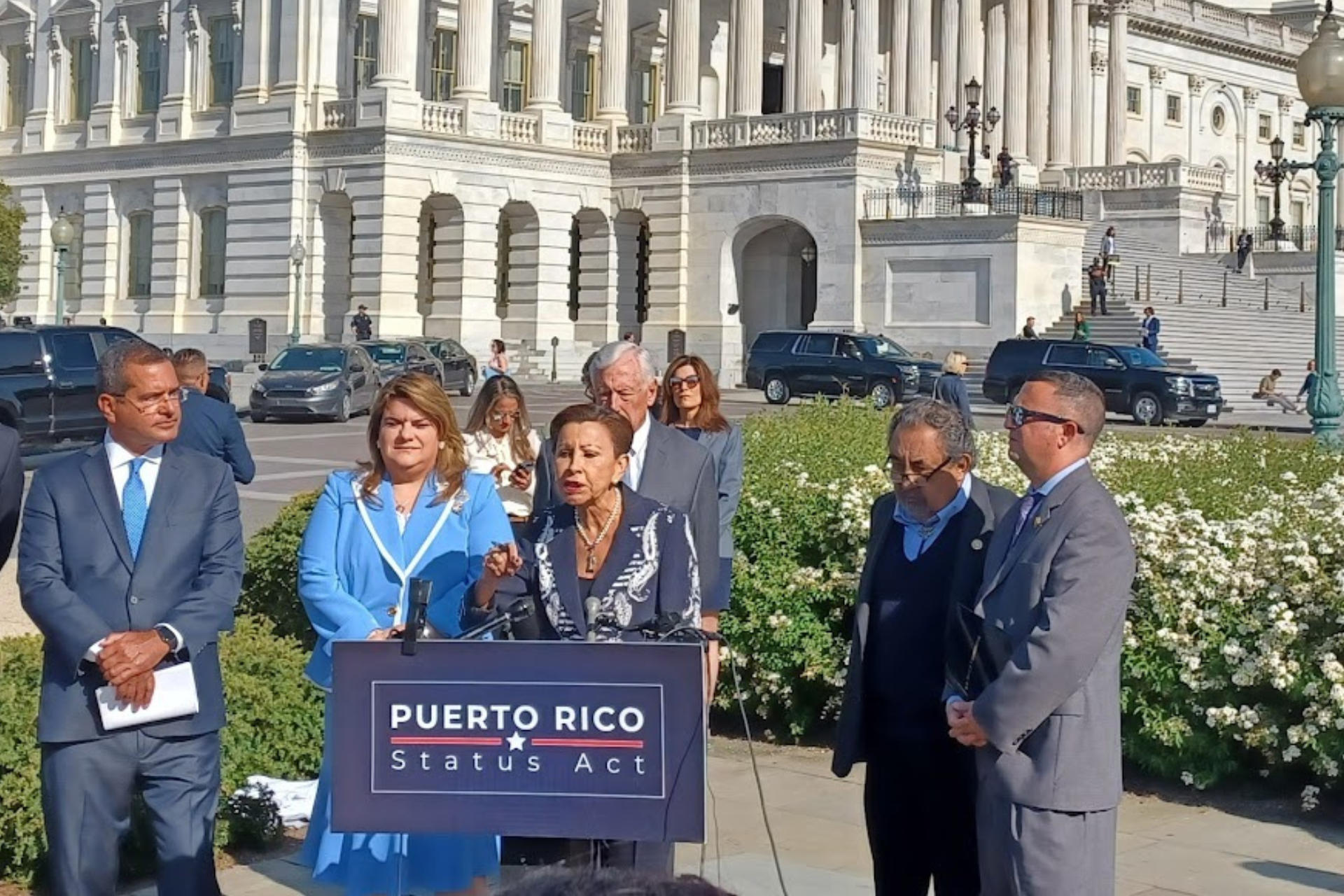
Nutrition Assistance is different in Puerto Rico. Because it is a unique program, and because the U.S. territory of Puerto Rico has no voting representation in the U.S. Senate, there are no Senators in the U.S. Congress who are directly accountable to the people of Puerto Rico. Puerto Rican Resident Commissioner Pablo José Hernández represents the roughly three million people of Puerto Rico in the U.S. House of Representatives, but he lacks the power to vote on legislation.
Hernández has introduced legislation to extend the SNAP program to Puerto Rico, just his predecessor, Jenniffer González-Colón did. President Trump recommended a $72 million increase for the Puerto Rico NAP program during the current fiscal year, but that funding request has not been enacted into law.
Puerto Rico used to be a part of the federal nutrition assistance program, but the U.S. territory was left out of the SNAP program when it was created. There have been efforts over the years to include Puerto Rico in the SNAP program, and the USDA has studied the matter, concluding that the transition from NAP to SNAP is possible but would take time.
If Puerto Rico’s nutrition assistance were to be included the SNAP program, help for Puerto Rico would automatically be included in the Hawley bill pending before Congress and all future SNAP increases. Being excluded from SNAP, Puerto Rico’s nutrition program is left out of the current Senate proposal and future reforms.