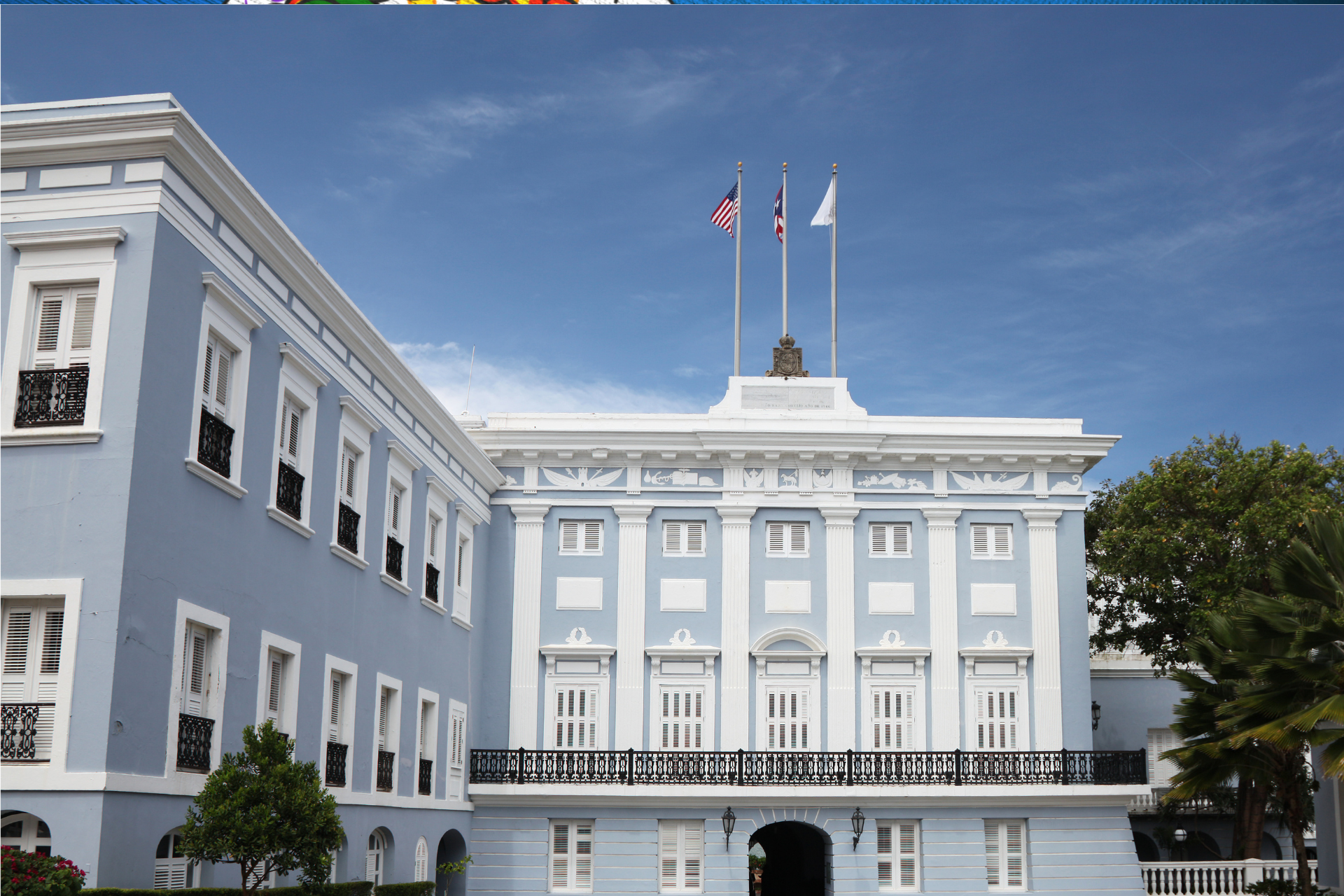
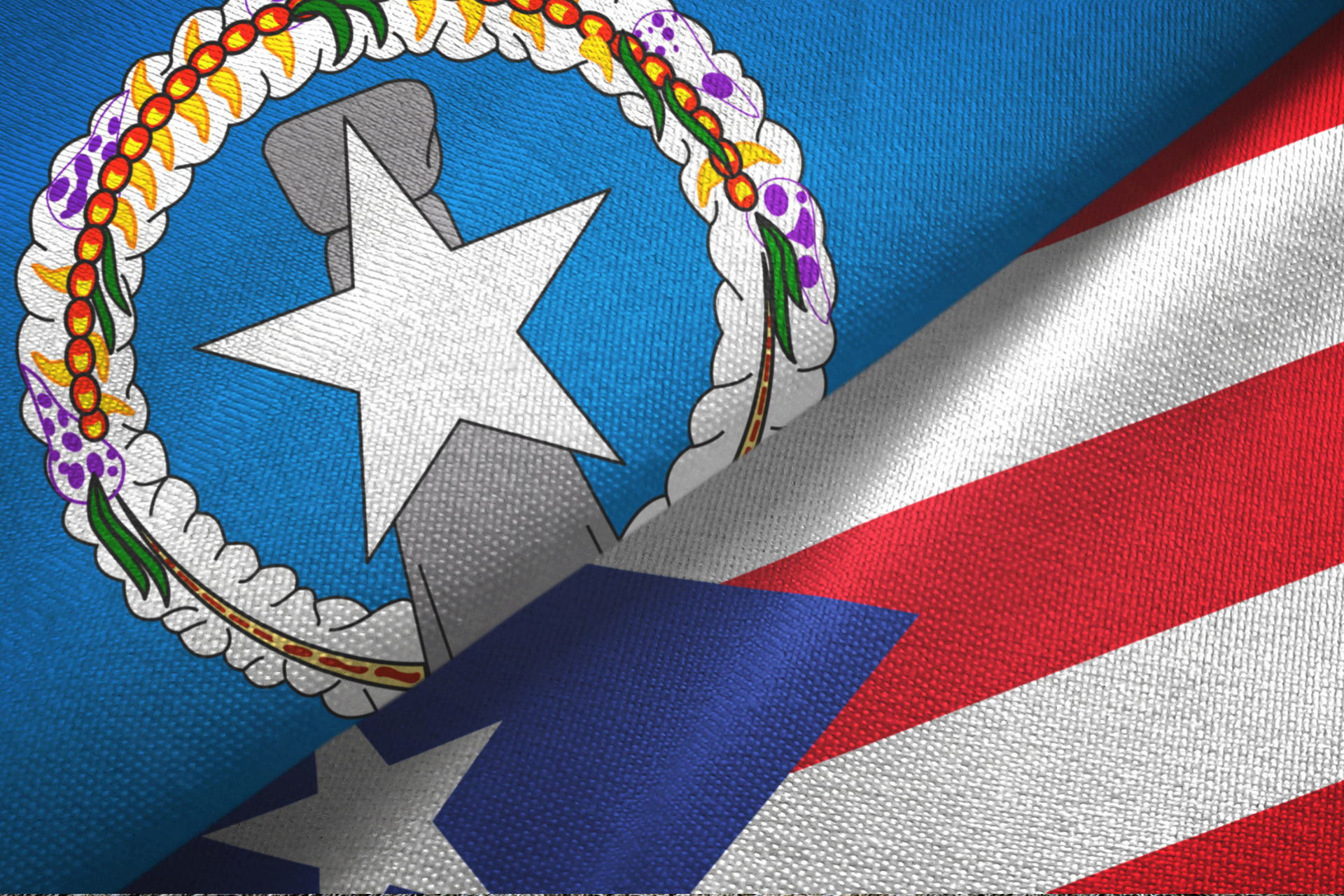
The term “insular areas” still comes up sometimes on government websites and in news reports, but the word “insular” has changed its primary meaning in modern English.
We now say “insular” when we mean closed-minded or ignorant about other cultures. The old style was to use “insular” as an adjective for islands. Insular areas were just islands. For the U.S. government, insular areas included U.S. island territories like Puerto Rico. These places are also often called island areas today.
Here’s the list of populated island areas associated with the United States:
U.S. Territories in the Atlantic
- Puerto Rico
- U.S. Virgin Islands (USVI)
U.S. Territories in the Pacific
- American Samoa
- Commonwealth of the Northern Mariana Islands (CNMI)
- Guam
U.S. Freely Associated States in the Pacific
- Federated States of Micronesia (FSM)
- Republic of the Marshall Islands (RMI)
- Republic of Palau
How does the U.S. benefit from associated island areas?
The strategic military importance of the U.S.-associated island areas is the strongest reason why the United States cherishes its relationships with the insular areas in the Pacific.
“From a national security perspective, the Pacific Islands form an essential part of a strategically vital region,” explained Ely Ratner, former assistant secretary for Indo-Pacific security affairs, in 2024 testimony before the Senate Foreign Relations Committee in a discussion over legislation providing funding for the Freely Associated States of Micronesia, the Marshall Islands and Palau.
“The U.S. military’s access and posture in the Pacific Islands are crucial for our logistics, sustainment and power projection throughout the region,” said Ratner. “Moreover, hundreds of billions of dollars in maritime trade flow through the Pacific Islands and our partners there provide critical linkages between the continental United States and our allies across the Indo-Pacific.”
Dr. Jonathan Ward, a former adviser to the Department of Defense, made the point even more strongly in his book The Decisive Decade: American Grand Strategy for Triumph over China. “China’s interest in the South Pacific Islands has long been an essential ingredient in their global grand strategy — not because of the economic potential of these small nations, but because of their importance to the military geography of Asia.”
Noting that China could, by gaining power over Pacific island areas, cut off connections between the United States and Australia, he goes on to point out that China is now seeking to gain the same kind of influence over Latin America that they have gained in Southeast Asia.
The strategic importance of the U.S.-associated island areas
The three freely associated states (FAS) commit to letting the U.S. use any of their land, water and air space for military purposes and, correspondingly, the U.S. has authority to deny other nations access to the same. The FAS also refrain from actions that could compromise U.S. national security.
In addition to the three freely associated states, Guam, the Commonwealth of the Northern Mariana Islands (CNMI), and American Samoa anchor U.S. military presence in the Pacific, allowing for power projection, deployment flexibility, and monitoring of expanding Chinese influence in the region.
The U.S. has significant military presence in its insular areas, especially in Guam and the freely associated states.
Earlier this month, the U.S. Air Force Global Strike Command conducted a test launch of an unarmed Minuteman III intercontinental ballistic missile from Vandenberg Space Force Base, California to the Marshall Islands. This annual test evaluated the ongoing reliability, operational readiness, and accuracy of the ICBM system.
The unarmed ICBM’s reentry vehicle traveled approximately 4,200 miles to the U.S. Army Space and Missile Defense Command’s Ronald Reagan Ballistic Missile Defense Test Site at the Kwajalein Atoll in the Republic of the Marshall Islands.
“The Reagan Test Site, equipped with advanced sensors, including high-fidelity metric and signature radars, optical sensors, and telemetry, collected critical data during the terminal phase of flight,” reported the Vandenberg Space Force Base. “RTS team members analyze this data to evaluate system performance and support the research, development, test and evaluation of America’s defense and space programs.”
Puerto Rico is the military and logistics hub for Latin America for the United States. The reopening of Roosevelt Roads military base underscores this essential strategic role for the territory.
Diplomatic advantages and disadvantages
Close relationships with freely associated states and ownership of the U.S. territories give the U.S. a greater foothold in the world and puts the United States in a stronger diplomatic position. The three FAS frequently support the U.S. in their votes at the United Nations. U.S. presence in the Pacific reinforces U.S. strength even as China builds its presence in the area.
While some observers have suggested that the United States is losing stature and influence in the global south, the connections with U.S.-associated island areas can reverse this trend if they are managed correctly.
On the other hand, U.S. control over its insular areas – which used to be called its “possessions” – does give the U.S. a black eye. In what has become an annual ritual, every year at the United Nations, the U.N. Special Committee on Decolonization considers a resolution in support of “self-determination and independence” for Puerto Rico and calls upon the United States “to assume its responsibility to promote a process to those ends.”
Increasingly in recent years, representatives of organizations favoring statehood as well as the government of Puerto Rico remind the Special Committee that statehood is another viable form of decolonization. These speakers often call on Congress to respect the will of the voters of Puerto Rico and admit the Island as a state. Other speakers do not call for either statehood or nationhood, but speak instead on issues such as the environment, gender violence, and other injustices associated with Puerto Rico’s continuing colonial relationship with the United States.
Since the 1950’s, the United States has consistently taken the position that the relationship between Puerto Rico and the federal government is an internal matter, and not under the purview of the United Nations. There is also a related sentiment that the situation is good enough for both the U.S. and Puerto Rico, although there has been increased recognition over the years of the unfinished business of American democracy.
Yet the U.N. scrutiny continues, as recently as June of 2025. In 2023, Puerto Rico’s lone representative to the U.S. Congress, then-Resident Commissioner Jenniffer Gonzalez-Colon, explained:
“It is no surprise that Cuba, Bolivia, Nicaragua, Russia, Syria, and Venezuela, who are amongst the worst human rights violators and anti-democratic regimes in the world, are once again calling for Puerto Rico’s independence in an attempt to advance their anti-American agenda and grow their influence in the region. The people of Puerto Rico strongly reject this attempt. For 106 years, Puerto Ricans have been proud American citizens, participated in the U.S. Armed Forces in record numbers, and our Island has been home to important United States military outposts across the Western Hemisphere.”
“As a U.S. territory and under the U.S. Constitution, it is Congress—not the United Nations, and certainly not a Committee made up of authoritarian regimes like Communist China, Cuba, Iran, Nicaragua, Russia, and Venezuela—that has the ultimate responsibility to address Puerto Rico’s political status,” she continued.
In conclusion, the Resident Commissioner forcefully pointed out that “these dictatorships have no credibility amongst responsible nations. If they were serious about self-determination, then why don’t they allow for free and fair elections overseen by credible domestic and international observers? Why do they continue to jeopardize the security and prosperity of all of their citizens? Why don’t they call on Russia to end its unprovoked, inhumane, and illegal invasion into Ukraine? The violence, persecution, intimidation, repression that the people in these countries face every day are evidence of the hypocrisy of the so-called leaders of these nations. Sitting on this Committee while enjoying impunity for their crimes is an insult to those of us who deeply cherish democracy and freedom.”