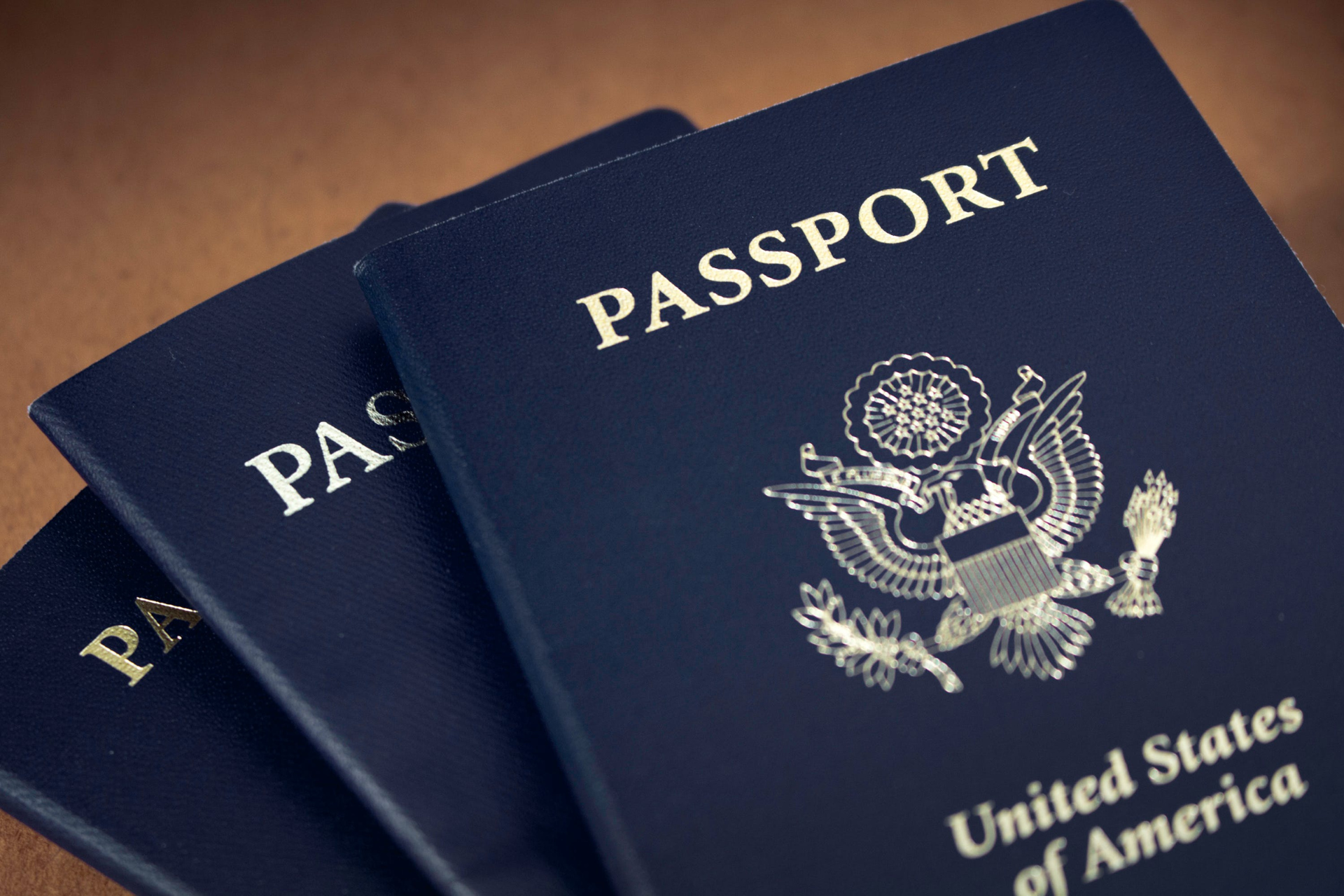
Under the U.S. Constitution, everyone born in a state is automatically a U.S. citizen by birthright.
Everyone born in Puerto Rico since 1917 is also a U.S. citizen by birthright, but this is not guaranteed by the Constitution– instead, people born in Puerto Rico are granted citizenship through a statute enacted by Congress. This law is called the Jones-Shafroth Act.
Because birthright citizenship is granted in Puerto Rico not explicitly in the U.S. Constitution but instead only under a 1917 federal law, U.S. citizenship in Puerto Rico could also be changed if Congress passes a new law. A provision in the U.S. Constitution is tougher to undo. It can be changed only by a constitutional amendment, which requires approval by two-thirds majorities in the House and Senate followed by ratification of 75% (38) of the states.
Stated more simply, birthright citizenship for people born in a state is guaranteed by the Constitution and cannot be changed simply by the president signing a new law. Birthright citizenship for Puerto Rico, however, does not have the same Constitutional guarantee.
The executive order challenging birthright citizenship
In January of 2025, soon after his inauguration, President Trump signed an executive order declaring that birthright citizenship would not apply to people born in a state if the following circumstances obtained:
(1) when that person’s mother was unlawfully present in the United States and the father was not a United States citizen or lawful permanent resident at the time of said person’s birth, or (2) when that person’s mother’s presence in the United States at the time of said person’s birth was lawful but temporary (such as, but not limited to, visiting the United States under the auspices of the Visa Waiver Program or visiting on a student, work, or tourist visa) and the father was not a United States citizen or lawful permanent resident at the time of said person’s birth.
In other words, the child of a woman who is either an illegal immigrant or a legal but temporary visitor will not have birthright citizenship unless the father is a citizen or permanent resident of the United States. This could describe many people in many different circumstances. Here are some examples of people whose children would not have birthright citizenship even if they were born in a state:
- a married couple from another country working in the United States on special skills work visas
- an illegal immigrant living on her own
- a foreign tourist whose baby arrives unexpectedly during a visit to a state
- foreign graduate students
The administration’s focus is on illegal immigrants and tourists intentionally planning to give birth in the United States in order to gain U.S. citizenship for their child. They hold that the words of the 14th amendment, “All persons born or naturalized in the United States and subject to the jurisdiction thereof, are citizens of the United States and of the State wherein they reside,” exclude such people because they are not “subject to the jurisdiction” of the United States. Historically, the only people who were considered not to be subject to U.S. jurisdiction in this context have been diplomats, whose embassies are officially not part of the United States. Everyone else in the United States is subject to U.S. laws while they are here.
Court decisions blocking the executive order
So far, a number of different judges in different courts around the country have ruled the executive order unconstitutional and blocked its application. Some of these decisions were “universal preliminary injunctions,” making the executive order inapplicable in all the states. The administration went to the Supreme Court for a decision on whether lower courts had the right to make injunctions outside their states. The Supreme Court said they did not, and asked the courts to switch to narrower injunctions.
The Supreme Court did not consider whether the executive order was unconstitutional or not. It only ruled on whether the courts which had blocked the executive order had the authority to do so for the entire nation.
Since that decision, more federal courts have blocked the executive order in different ways, including the United States Court of Appeals for the First Circuit on October 3, 2025.
Supreme Court decision
The Department of Justice has now asked the Supreme Court to rule on the constitutionality of the executive order. “The lower court’s decisions invalidated a policy of prime importance to the President and his Administration in a manner that undermines our border security.” said Solicitor General D. John Sauer. “Those decisions confer, without lawful justification, the privilege of American citizenship on hundreds of thousands of unqualified people.”
The Supreme Court has not yet agreed to add the case to its docket.