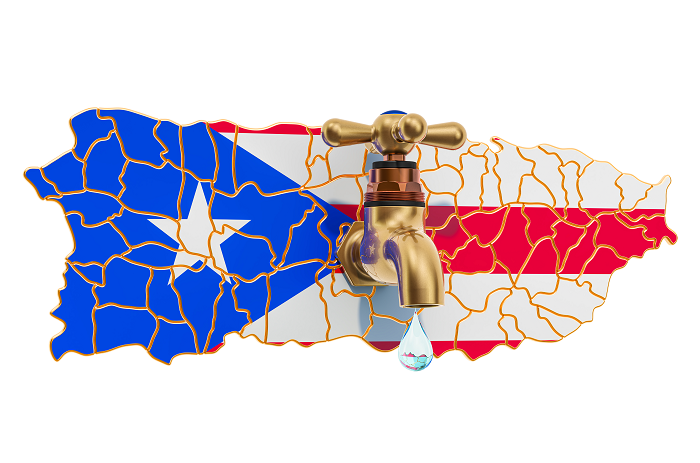
New York Senator Kirsten Gillibrand (D) has indicated that she will insist on the inclusion of SNAP (Supplemental Nutrition Assistance Program) for Puerto Rico in the version of a comprehensive agriculture proposal that the U.S. Senate is evaluating, despite the rejection of Republicans in the House of Representatives in their version.
“While Republicans have shown little support for improving nutrition assistance for Puerto Rico, Senator Gillibrand remains committed to fighting for its inclusion in the Farm Bill,” Adrien Gardner Lesser, Gillibrand’s press secretary for New York City and State, told El Diario.
The U.S. House of Representatives passed the Farm, Food, and National Security Act of 2026 (H.R. 7567) on April 30, 2026, with a 224-200 vote. The proposal, often referred to as the “Farm Bill,” serves as a five-year reauthorization of agriculture and nutrition programs. The proposal now moves to the Senate, where timing of the bill’s consideration is uncertain.
The High Cost of Food
Low-income families often struggle to cover the costs of rent, utilities, and transportation to work. What’s left over from these essentials may be what’s available to buy food — and that often is not enough to cover the cost of healthy groceries for the family.
This is a growing problem as inflation inflates food prices. The revised USDA food pyramid calls for more animal protein, which is more expensive (and showing particularly high levels of inflation). The Supplemental Nutrition Assistance Program (SNAP) is the government’s primary means of helping needy families put food on the table. This program is available in every state, the District of Columbia, Guam, and the U.S. Virgin Islands. Not in Puerto Rico. Why not? Doesn’t Puerto Rico deserve a spot in the federal nutrition assistance program?
Puerto Rico’s nutrition assistance program
Puerto Rico was included in the original federal nutrition assistance program, known as food stamps, in 1974. In 1981, as part of an effort to federal costs, Puerto Rico was cut from a new, revised federal nutrition assistance program called Supplemental Nutrition Assistance Program (SNAP) and instead began to receive a capped federal allotment, call the Nutrition Assistance Program (NAP). The amount of money provided to the Island under NAP is a set figure. While SNAP responds to greater need with greater funding, NAP is not flexible. The amount was set at 25% less than the Island had received before 1981. Since that time, Puerto Rico has provided less support and fewer people have been eligible.
Puerto Rico imports about 85% of food consumed on the Island. Inflation in food prices and transportation costs have naturally caused price hikes on groceries. In addition, Puerto Rico, unlike most states, charges sales tax on groceries. What did needy families in Puerto Rico do to cope with the lessened benefits? They ate less, and had to choose less nutritious foods. Research showed that people in Puerto Rico ate fewer fruits and vegetables than the national average, and current data shows that 40% of people in Puerto Rico face food insecurity.
NAP to SNAP
In January of 2026, Resident Commissioner Pablo José Hernández introduced a resolution calling for a transition from Puerto Rico’s current nutritional assistance program, NAP, to SNAP. This was not by any means the first time the proposal has been made. For years, members of Congress, Puerto Rico leaders, and human rights organizations have supported the idea of a NAP to SNAP transition.
When the idea was considered as part of a Farm Bill that passed in 2018, Puerto Rico NAP to SNAP was not included, but the bill did recognize the importance of the issue by called for a study on the issue. USDA completed this study a few years later, concluding that Puerto Rico NAP to SNAP would be possible but would also require and time and additional resources to make the transition.
Most recently, Senators Kirsten Gillibrand (D-NY), John Fetterman(D-PA), and Democratic Leader Charles E. Schumer (D-NY) introduced the Puerto Rico Nutrition Assistance Fairness Act, calling for SNAP coverage for Puerto Rico. “Puerto Rico’s exclusion from SNAP has needlessly punished Puerto Ricans, ripping away essential nutrition benefits and billions of dollars in funding to the island,” said Senator Gillibrand. Both the resident commissioner and Puerto Rico Governor Jenniffer Gonzalez-Colon advocate for adoption of this legislation.
Why doesn’t Puerto Rico get the same food assistance as states?
Dropping Puerto Rico from the more generous was clearly framed as a cost-saving measure, with overtones of reducing dependency and increasing incentives to work. The resistance to a modern NAP to SNAP transition is not as clear. While there are many statements and speeches in favor of the NAP to SNAP transition, no legislators have stood up and said, “Puerto Rico doesn’t deserve food stamps.”
Instead, general policy positions, including a desire to avoid expanding SNAP, have led Congress to ignore bills and amendments proposing the NAP to SNAP transition. Even when the transition has been included in consideration of the Farm Bill at some point, it has never made it into law.
Legislators who would like to see a reduction in social assistance programs make every effort to reduce such spending but often do not success in the face on constituent push back. Since Puerto Rico is a territory, Congress can feel free to skimp on Puerto Rico.