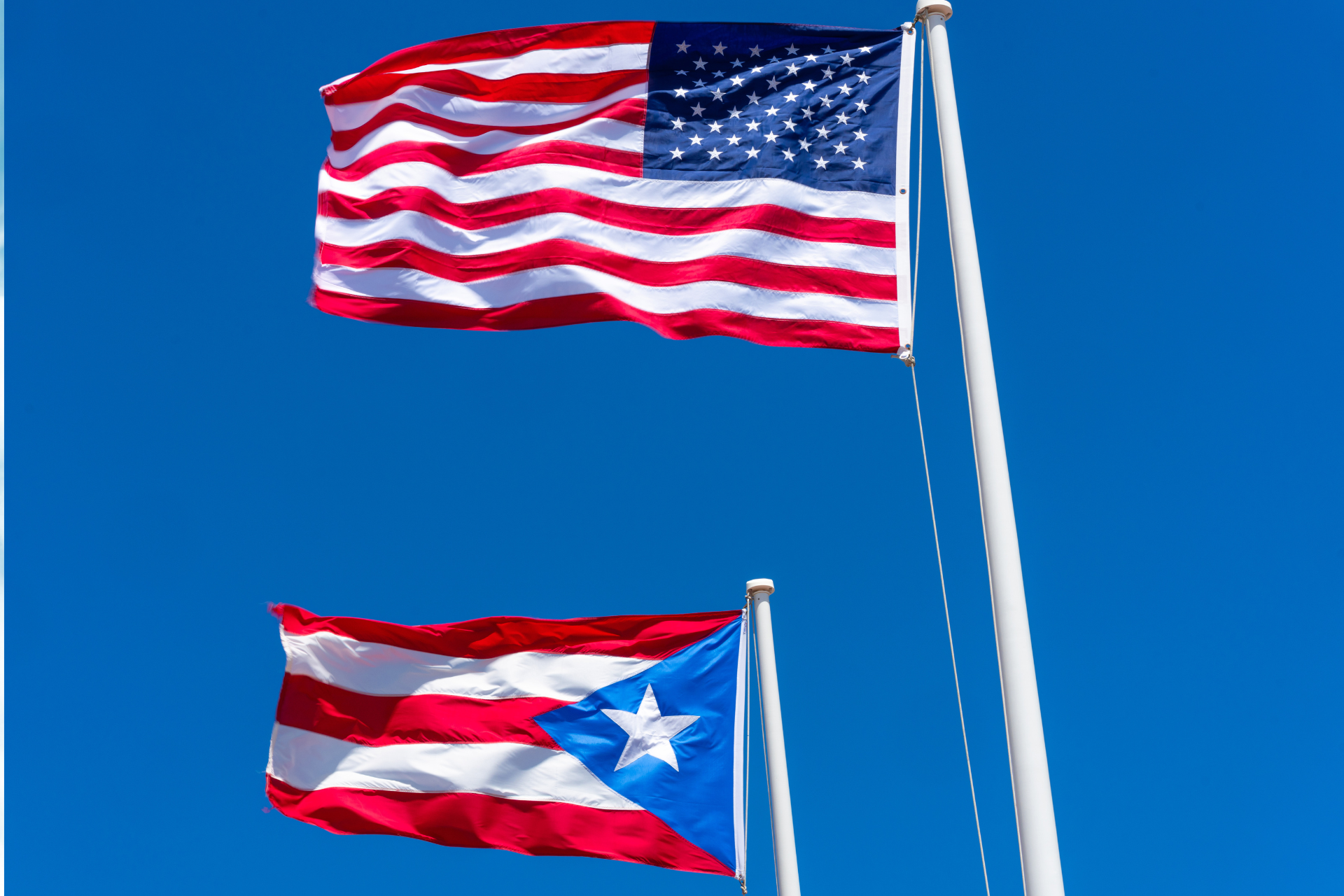
On August 31, 2026, the Senate of Puerto Rico approved a Puerto Rico House Resolution “To commemorate the 250th Anniversary of the United States of America and to petition the President and the Congress of the United States for the admission of Puerto Rico as a State of the Union; to require that a copy of this Joint Resolution be transmitted to the President and the Congress of the United States of America; and for other related purposes.” On October 16, Governor Jennifer Gonzalez-Colon signed the resolution into law and sent a formal request for statehood to Congress.
The purpose of the resolution
The resolution begins, “On July 4, 2026, the United States of America commemorated the 250th anniversary of its Declaration of Independence—the founding document of our Nation’s commitment to government by the consent of the governed and the belief that all men are created equal, that they are endowed by their Creator with certain unalienable Rights, and that among these are Life, Liberty, and the pursuit of Happiness.
“Puerto Ricans have been citizens of the United States since 1917 and have continuously contributed to the economic, military, cultural, and civic life of our Nation. However, in 2026, more than three million U.S. citizens reside in Puerto Rico under a territorial status subject to the plenary authority of Congress…”
“The people of Puerto Rico have repeatedly exercised their right to determine their political future through plebiscites and have expressed a preference for Puerto Rico to become a State of the Union,” it continues. “In all plebiscites held over the last decade—including those in 2012, 2017, 2020, and 2024—statehood received a majority of the legal votes cast among the status options presented to the electorate.” Continuing calls for self-determination for Puerto Rico ignore the fact that the Island has already voted repeatedly — in every status vote held during the current century — for statehood.
The resolution goes on to detail the negative consequences of the current territorial status. “The continued existence of the current territorial status leaves U.S. citizens residing in Puerto Rico without voting representation in Congress and without a voice in the election of the President and Vice President of the United States of America,” the resolution reads. “All of this leads us to conclude that the commemoration of the Nation’s Semi-quincentennial presents a historic opportunity for the United States to reaffirm its commitment to the principle that government derives its legitimate powers from the consent of the governed—a principle reflected in the admission of thirty-two former U.S. territories that petitioned Congress for statehood, based on the democratically expressed consent of their inhabitants, and were duly admitted as states of the Union. None of them were rejected; Puerto Rico should not be the exception.”
The resolution
The resolution itself is straightforward. “The Legislative Assembly and the Governor of Puerto Rico, acting on behalf of the People of Puerto Rico, reaffirm their commitment to the United States Constitution, democratic self-government, and the principles articulated in the Declaration of Independence. Therefore, consistent with the principles of representative government embodied in the Declaration of Independence, the year of our Nation’s Semi quincentennial is the appropriate and historic occasion for the United States to strengthen the Union by allowing the admission of Puerto Rico as a State,” it begins. “The Legislative Assembly and the Governor of Puerto Rico formally request that Congress, pursuant to its authority under Article IV, Section 3, Clause 1 of the United States Constitution, enact legislation providing for the admission of Puerto Rico as a State of the Union on an equal footing with the several States.”
Though it is Congress, not the President of the United States, who must pass legislation to admit new states, the resolution calls on the president to support Puerto Rico’s admission. It states that copies of the resolution must be sent to Congress and to the president.
The meaning of this event
Previous territories which have become states have taken the same step of sending official requests for statehood to Congress and the president. Dakota Territory sent the following request in 1885: “To the President and Congress of the United States: The people of that part of Dakota south of the forty-sixth parallel of north latitude, having adopted a constitution republican in form, and taken the necessary preliminary measures toward organizing a State government, now, through their properly constituted agents, present such constitution to the President and Congress of the United States, and, confidently relying upon the rights which pertain to American citizens like circumstanced, respectfully but earnestly pray to be admitted as a State into the Union of States.”
The next step would be for Congress to pass an Admission Act for Puerto Rico. The president would sign it, and Puerto Rico would become a state, as 32 territories have previously done.
The request itself does not make Puerto Rico a state; Congress must take action. However, the official request is an important step toward the resolution of Puerto Rico’s political status.