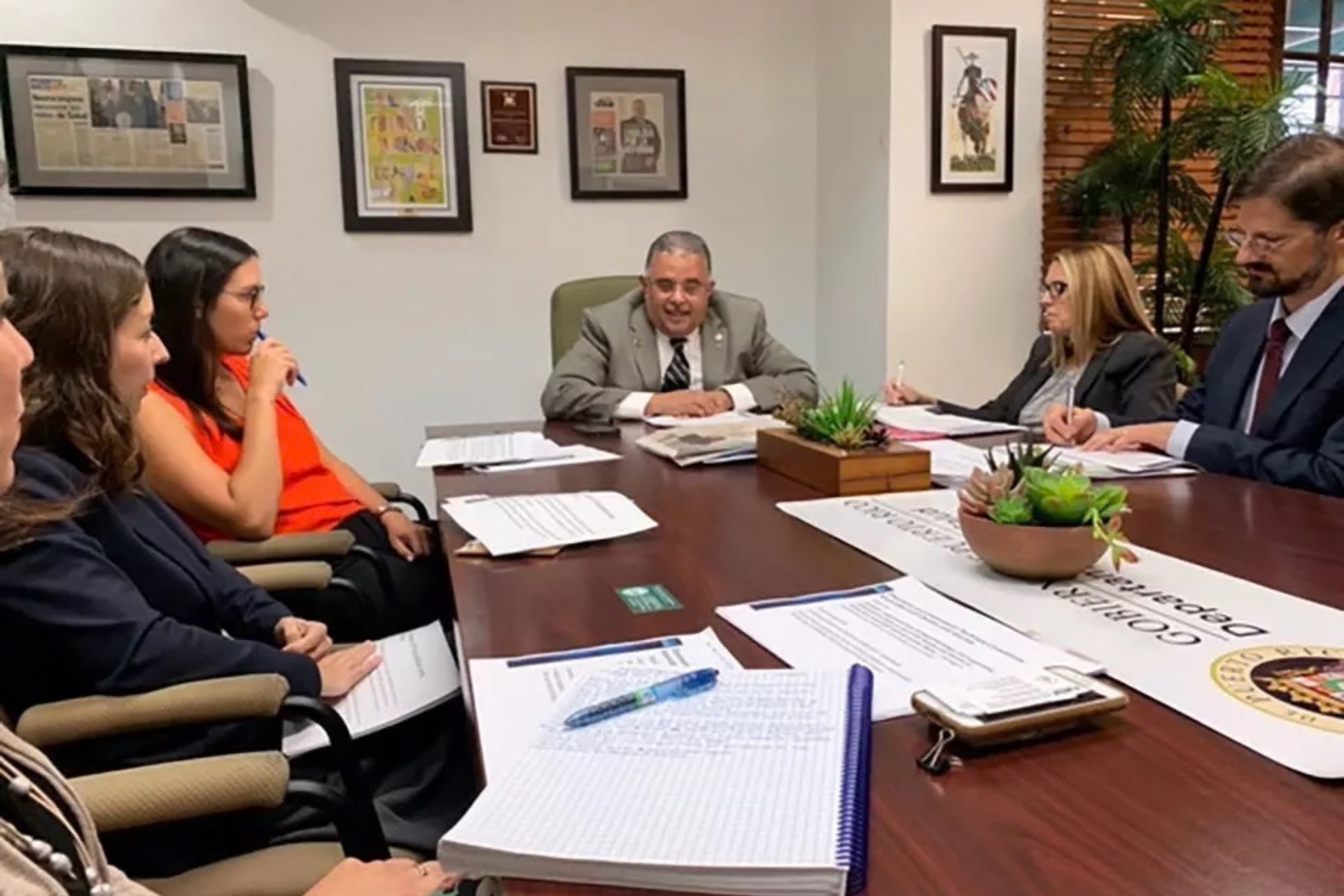
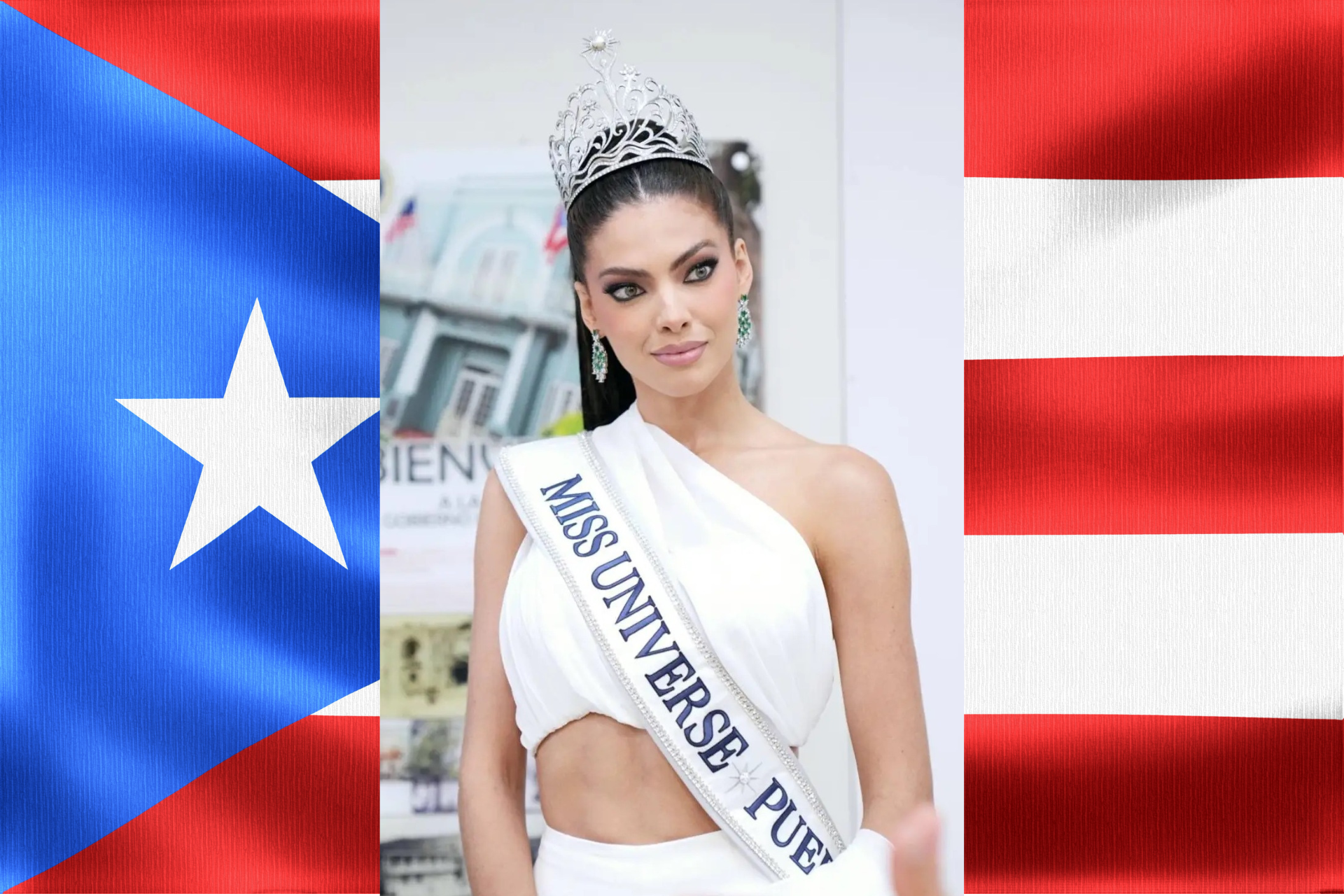
The U.S. Senate Committee on Energy and Natural Resources (SENR) held a hearing “to Examine the State of the U.S. Territories” on June 17, 2026. Each of the governors of the five U.S. territories submitted written testimony for the hearing, and four of the five governors attended to deliver remarks in person. Puerto Rico Governor Jenniffer Gonzalez-Colon’s was the first governor to offer spoken remarks to the Senators on the committee. She also prepared written testimony in which she emphasized Puerto Rico’s “significant progress” to its “most pressing challenges.” In response, several Senators asked questions to the governor, generally expressing support for her priorities.
Fiscal responsibility
“A decade ago, when Puerto Rico defaulted on its debts and Congress enacted the Puerto Rico Oversight, Management, and Economic Stability Act (PROMESA), talking about fiscal responsibility on the island sounded like a distant goal,” the governor began. “Today, under my administration, fiscal responsibility is no longer an aspiration—it is a reality.”
Gonzalez-Colon pointed to the first certified balanced budget since 2016, pointing out that this was the first year that the territorial government had taken the lead in establishing the budget. She went on to say that she expected to turn in the second certified balanced budget this year, bringing Puerto Rico halfway to the goal of four consecutive balanced budgets. The four budgets are required to end the PROMESA Financial Oversight and Management Board, which is designed to remain in place until that milestone is reached.
Recent bills introduced in Congress include actions to end the board. Gonzalez-Colon is working to end the board through efforts to meet the legal requirements to do so.
The governor gave evidence of fiscal discipline and a pro-growth approach to the Island’s economy, including more than $900 million in savings and the highest employment rate since 2008. The same dedication to both growth and fiscal accountability, she said, has allowed Puerto Rico to make real strides in improving basic electricity and water systems. While the Island has continued to face problems with basic utilities, Gonzalez-Colon assured the Senate that progress is being made. She also offered evidence that future progress will not have to rely only on federal emergency funds.
During the hearing, SENR Chairman Mike Lee (R-UT) pushed back, questioning the governor regarding reports of malfeasance in the Puerto Rico Department of Economic Development and Commerce (DDEC), to which she replied that the allegations are false but are nonetheless being investigated by officials. Chairman Lee followed up with a question asking about how Congress can “be assured that federal funds sent to Puerto Rico aren’t being misused or misplaced.” The governor explained that her government is “imposing more regulations in to oversight and approving and presenting more local laws to review and do oversight on local and federal, on federal budgeting and review and corruption probes as well.”
Healthcare
The first of the challenges Gonzalez-Colon addressed was the inequity in federal healthcare funding in Puerto Rico. “As we approach 2027, I look forward to working with Congress, the Department of Health and Human Services (HHS), and the Centers for Medicare & Medicaid Services (CMS) to secure a new long-term Medicaid funding agreement for Puerto Rico” she said.
“Unlike the 50 States—where federal funding for Medicaid is open ended and the Federal Medical Assistance Percentage (FMAP) is determined annually based on per capita income—the island receives a capped allotment of funds and has a statutorily set FMAP of 55 percent,” she said. “This different structure and funding limitation creates challenges, restricting long-term planning and preventing us from covering all mandatory Medicaid services.”
She touched on the steps her administration has taken to attack fraud and waste in the Medicare and Medicaid programs in Puerto Rico and said she looked forward to working with Congress to improve federal funding for the Island. The current primary funding stream for Medicaid to Puerto Rico is set to expire after September of 2027, at which time a$3.7 billion annual payment could end, reducing Puerto Rico’s Medicaid budget from $4.2 billion to $500 million.
At the hearing, the Governor urged a “long-term” reauthorization of Medicaid allocations to avoid “a drastic and unsustainable decrease in federal assistance.” After questioning from SENR member and Senate Finance Committee Chairman Ron Wyden (D-OR), who began his remarks by asking the governor to paint a clear picture of what funding stability means for Puerto Rico, the governor maintained that a fiscal cliff “would be catastrophic.” She thanked Sen. Wyden for his inquiry and leadership, and then she explained in detail:
“As the hurricanes hit us in 2017, we received 100% FMAP for two years and after that, because of the because of the pandemic, we received 86% FMAP, which is the the cost share of federal money that was assigned to the to the territories at this time is 76%. It covers 1.3 million Americans, at least in Puerto Rico.”
“Even with that money and we’re talking about $3.6 billion a year on the island that never covers all the mandatory programs from Medicaid on the island, because we cannot afford the rest of the programs that means we don’t cover long term care for elderly citizens in Puerto Rico that’s the reason you see a lot of Puerto Ricans moving to Florida, moving to Texas, and moving to the rest of the states, because there they can receive all the mandatory programs.”
Senator Wyden responded by reassuring the governor that the Senate will “pull out all the stops to handle the situation that’s coming up at the end of the year and I share your view that the pain would be devastating.”
Senator Alex Padilla (D-CA) picked up on the Medicaid funding issue first raised by Senator Wyden (D-OR) focusing particularly on brain drain of Puerto Rican doctors leaving the territory for higher payments in the states. Padilla noted that below market federal rates are pushing providers off the island, not just the patients. He asked “what role do other training pipelines, residency slots and licensure play in growing a homegrown workforce and where would federal better federal support make a difference?” The governor’s response was detailed, noting hospital reimbursement rates, long term care, non-emergency transportation, uncompensated care, and durable medical equipment, among other issues.
Senator Ruben Gallego (D-AZ) similarly noted the problematic aspects of Puerto Rico’s capped nutrition assistance program. He then launched into a longer statement about his experience serving with Puerto Ricans in the U.S. military: “I served with a lot of Puerto Rican Marines in the Iraq war, and Puerto Rico actually has some of the highest concentration of veterans and per capita participation. One of the things that really disturbed me when I got back was that a lot of them did not receive the same benefits that they do on the mainland so if you serve your country as an American from Puerto Rican, and you go to Florida, you get full benefits…Tricare for life, you get treated great. However, if you are a veteran on the island of Puerto Rico, you do not actually get the same benefits.”
Economic growth
Puerto Rico is working to solidify its manufacturing base. “I am proud to report that, to date, twenty-three manufacturing companies have announced plans to expand or establish operations on the island, committing to investing over $2.6 billion and creating 5,700 new jobs,” said the governor. “This includes biopharmaceutical companies like Eli Lilly, Amgen, and Taiwan-based PharmaEssentia, as well as defense and aerospace corporations such as Collins Aerospace.”
Gonzalez-Colon also pointed out, “These investments are not only supporting Puerto Rico’s economic development, but they are also strengthening U.S. supply chains by reducing our dependence on foreign adversaries like Communist China for medical devices, pharmaceuticals, and other critical products.”
She also brought up the new military investments in Puerto Rico, saying, “I am proud that, over the past year, Puerto Rico has played such an important role supporting our national security, protecting the homeland from transnational criminal organizations and other malign actors operating in the Western Hemisphere.”
Energy
SENR Committee Ranking Democratic Senator Martine Heinrich (NM) asked Governor Gonzalez-Colon about “all too frequent outages and reliability concerns” and who will be responsible for to managing Puerto Rico’s grid and generation assets in the future. She responded that her government is asking a court to allow the government of Puerto Rico to begin a formal process to ask for companies that are interested in leading the next chapter of reform, and that related efforts are underway.
Senator King (I-MN) noted that only 20% of Puerto Rico’s energy is solar, mostly rooftop rather than any major system. His first question was whether the Trump administration had cancelled roughly $300 million earmarked for solar development.
Governor Gonzalez-Colon replied that during her time in Congress, “Congress approved $1 billion of money to solar installations on the island,” and “more than $500 million” in solar panels were installed.” She expressed an interested in expanding solar use in Puerto Rico.
Statehood
Gonzalez-Colon is a strong supporter of statehood for Puerto Rico, and the voters in the territory have voted for statehood in every plebiscite held in this century. It is therefore no surprise that she brought up statehood in her testimony. “As we approach the 250th anniversary of the signing of the Declaration of Independence, Puerto Rico stands ready to continue contributing to the nation and upholding our founding principles—this time as an equal, full-fledged member of the Union,” she said. “We have been part of the United States since 1898 and proud American citizens since 1917. During that time, we have been active participants in the nation’s history, including the over 235,000 Puerto Ricans who have served in the U.S. Armed Forces since World War I to defend American democracy and values. Puerto Rico is ready to take the next step in our relationship with the United States. Since 2012, voters have chosen statehood in four plebiscites. As Governor, I look forward to working with Congress to respect that democratic mandate and secure equal rights, equal responsibilities, and equal representation for the 3.2 million American citizens who call Puerto Rico home.”
During his questioning Sen. Wyden noted that the U.S. Departments of Justice and State, as well as Congress, have “made clear again and again that the alternatives to the current unincorporated territory status under the Constitution are essentially statehood, nationhood as a purely independent nation, or nationhood freely associated with the United States.”
He then pointed out that some people nonetheless “are floating ideas of a Commonwealth that isn’t governed by Congress and can even make its own treaties, but is still part of the United States.” He called such ideas “unconstitutional fantasies” and “a distraction,” and said that the debate “needs to stay focused on if Puerto Rico should become a state or an independent nation.”
Governor Gonzalez Colon affirmed, noting that “Republican and Democratic Departments of Justice, in administrations of both parties, have declared that unconstitutional. No territory can declare what federal laws apply to a territory. That cannot happen.”
Referring to the related notion of “Commonwealth” and the Resident Commissioner’s recently introduced bill she added:
[S]aying that you can have a territory deciding what federal laws apply and what do not, and that they can choose which countries they want to have a treaty with or not, that has been banned by the Supreme Court of this land and by the Department of Justice, in both Republican and Democratic administrations.
And the people of Puerto Rico have rejected that, not once, not twice, but four times in a row, and in the last one in 2024, more than 60 percent voted against the current territorial status. So that is denying the consensus on the island, where more than 60 percent want statehood.
So, Senator, I believe that the only options the people of Puerto Rico have are independence, remaining as a territory, or statehood, which is the preferred option of the people of the island.
And you know what? More than 230,000 people on our island have served in the uniform of the United States, and as we are celebrating the 250th anniversary of America, it is time to solve our issue.
Updated June 23, 2026