
On Wednesday, April 1, the Supreme Court will hear oral arguments in one of its highest profile cases of 2026. Trump v. Barbara is a challenge to President Donald Trump’s Executive Order (EO) seeking to end birthright citizenship, the automatic granting of U.S. citizenship to people born in the United States.
The case is being framed as a constitutional question: Federal courts have concluded that the Executive Order is unconstitutional under the Fourteenth Amendment. The Trump administration disagrees. U.S. Department of Justice attorneys contend that lower court rulings are based on an incorrect interpretation of the Constitution.
On February 19, Congressional Democrats submitted a legal brief offering a second – “separate and independent” – reason why the Executive Order should be thrown out: The Trump order violates a U.S. law.
“It is not enough for the Administration to show that the Executive Order is consistent with the Constitution,” the 217 Congressional Democrats argue in their brief. They claim instead that the Trump Administration must also show that the order is “consistent with…the broader citizenship guarantee” provided in a 1940 law that grants citizenship upon birth in the United States [8 USC 1401].
“[T]he Fourteenth Amendment does not set out a ceiling,” the Members explain in their brief. “Congress is free to confer birthright citizenship more broadly, to people who do not have citizenship by virtue of the constitutional text.” The Constitution provides a floor, not a ceiling.
The Example of Puerto Rico
More than 80% of all Congressional Democrats, led by top House Judiciary Committee Representative Jamie Raskin (D-MD), point to the statutory citizenship of Puerto Ricans as a “key piece of evidence” that Congress can provide rights separately and independently from those included in the U.S. Constitution.
The brief, signed by every Democrat serving on the Judiciary Committee in both the U.S. House of Representatives and U.S. Senate, explains that when Congress passed its citizenship law in 1940, “the Constitution was not then understood to extend citizenship of its own force, to persons born in certain U.S. overseas territories, including Puerto Rico.”
The 1940 law, however, “conveyed statutory citizenship independently of any rights under the Fourteenth Amendment,” according to the legal brief. In passing the law, the Representatives and Senators explain, “Congress deliberately adopted a citizenship rule more generous than the constitutional floor: Persons born in Puerto Rico, after all, had no constitutional right to citizenship.”
Implications for Independence
Congress extended U.S. citizenship to Puerto Rico by passing a law. If Puerto Rico were to become a new country, Congress would revisit this law. Before the current relationship is even severed. In the course of granting independence, Congress would pass a new law. This law would cover matters related to immigration and U.S. citizenship.
As a political and policy matter, Congress cannot allow for people in a new nation of Puerto Rico to remain U.S. citizens. There are policy reasons a mile long why ongoing U.S. citizenship in a new foreign country of three million people would be problematic, beginning with but not limited to matters of national security and foreign policy.
In a new country of Puerto Rico, Congress can – and would – easily establish a new mandate that birth in Puerto Rico will no longer be a basis for granting U.S. citizenship. The fate of current U.S. citizenship in this new nation of Puerto Rico would be very much on the table.
This point may be sobering to the roughly three million U.S. citizens living in Puerto Rico and the six million U.S. citizens of Puerto Rican heritage living stateside, but it also brings clarity, and with such clarity comes the potential for progress.
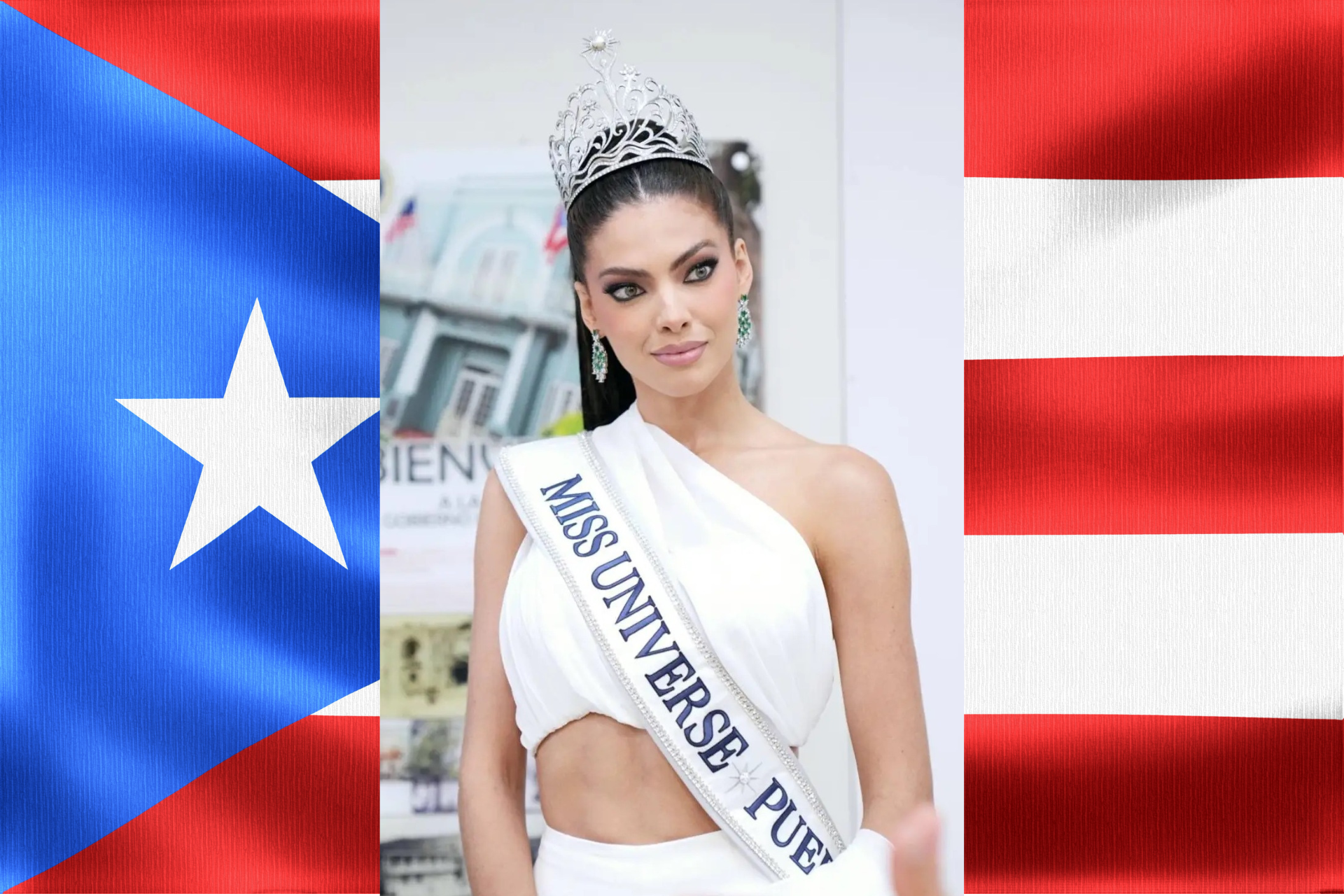

It is a fact that the United States Congress, through the 1917 Jones Act, gave Puerto Ricans the US citizenship, and immediately starting drafting young men into the US armed forces to fight in WWI in Europe. So it was a quid pro quo; not a gift. We have been getting drafted, against the will of many, to go and get shot at in every war since.
Then when opposition to the war against the people of Indochina started in the 1960’s in Puerto Rican universities and high schools, the US responded by extending the Agriculture Department’s food stamp program to Puerto Rico. Since the majority of households met the poverty threshold needed to qualify, over night millions of Puerto Ricans on the islands (Puerto Rico is an archipelago with four islands) started getting food stamps. Again, this was a quid pro quo; we’ll give you food stamps as long as you stop your opposition to the wars we decide to fight, and your opposition to the colonial status that we, the US, has imposed on your country. It worked.
They also responded by increasing the targeting and repression against anti-war and anti-colonial sectors of the population. The same COINTELPRO operation that was used against the Black Panthers and Young Lords in the US, as well as other groups, was used in Puerto Rico. This has all been documented in books, news reports, documentaries, Congressional investigations, etc.
As it was given, it can be taken away, because it was granted pursuant to statute, not birthright under the Constitution of the US. You suggest in your article that if the people of Puerto Rico opt for independence they will lose US citizenship and their food stamps (now it’s a debit card called NAP/PAN) as well as all the other federal programs and money transfers that have been added on since the 1960’s. Social Security, SSI, Farmers Home Administration loans (used for building homes in rural communities),National Flood Insurance Program, Older Americans Act, Disaster Relief (FEMA) and Small Business Administration (SBA) disaster loans, Community Development Block Grants, as well as a number of other ad hoc money transfers for roads and bridge building and repair, and such.
This is an implied threat designed to scare people away from exercising the right of all colonized people under international law to self-determination. That the people of Puerto Rico will lose all these so-called freebees, which they got in exchange for the blood of their young people in all the wars from the Mexican Revolution till now (because their military service started with the search for Pancho Villa in the early 1900’s), if they opt for independence.
In reality, the continued grant of US citizenship is much more fragile than that. It can be taken away on the whim of Donald “Bonespur” Trump and the Republican Party at any time. There are many in the Democratic Party that feel the same way and would go along with it. In August 2018 he was reported to have called us “dirty” and wanted Denmark to trade us for Greenland. He’s called us all corrupt on a number of occasions, which by the way is absolutely true of the colonial political class that the US put in power in the 1940’s, when it transitioned away from direct colonial rule in response to the gathering strength of the independence movements, but it’s not true of all of us. After feeding and sustaining these local bottom feeders for decades, who see public office as a means to enrich themselves, the US President now calls us all corrupt and dirty. Mean spirited behavior, and short-sighted, but completely consistent with his behavior to anyone he doesn’t like, not just Puerto Ricans.
Once he’s finished brutalizing, Iran, Cuba, and Nicaragua, he will turn his attention to us, the Puerto Rican nation. He hasn’t forgotten us; he’s just taking care of others higher on the list.