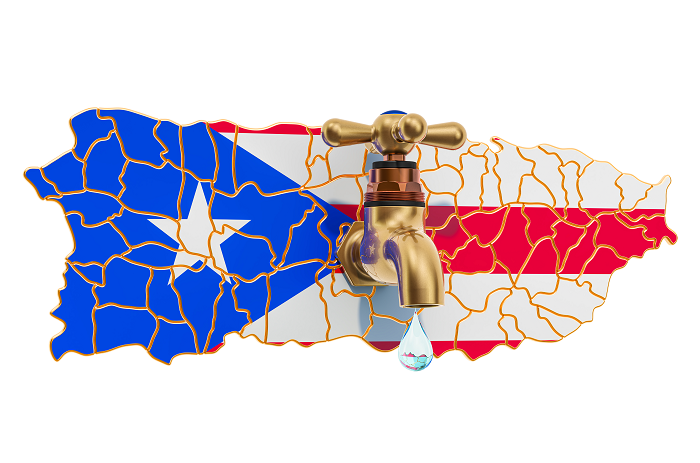
For more than a hundred years, the Insular Cases, a series of Supreme Court decisions from the early 1900s, have kept Puerto Rico’s residents from full recognition as American citizens. The implications of this status are not merely legal or abstract; they directly impact the daily lives of millions of people on the island, influencing their access to government services, political representation, and basic rights.
History reminds us that Puerto Rico’s current second-class status need not last forever. As Dr. Martin Luther King Jr. said, “the arc of the moral universe is long, but it bends toward justice.” Despite the fact that the Insular Cases have imposed inequality on Puerto Rico for decades, just as Plessy v. Ferguson justified segregation, growing public support now demands their reversal. The Supreme Court’s decisions in the Insular Cases, which declared certain territories “unincorporated” and thus not fully protected by the Constitution, continue to justify unequal treatment. Yet the chorus calling for change is growing louder, offering hope that Puerto Rico will one day receive the recognition and rights it deserves.
How Did Pauli Murray Dismantle Separate but Equal?
We can find a powerful example of this struggle and eventual success in the pursuit of equality, in the life and work of Pauli Murray. Like other voices for justice who were once ignored, Murray’s persistent advocacy played a major role in ending “separate but equal.” Her legacy shows that even deeply entrenched doctrines can be overturned with steadfast effort and faith in justice. The fight to dismantle the Insular Cases calls for the same determination and vision, reminding us that while justice may be delayed, it is never out of reach.
As a student at Howard University School of Law, Pauli Murray’s legal scholarship marked her first effort to challenge the precedent established by Plessy. At that time, many civil rights leaders accepted segregation as constitutional under Plessy and focused on improving conditions within the “separate but equal” framework. Murray, however, rejected this approach outright. She argued that segregation imposed an unconstitutional mark of inferiority on Black Americans, directly violating the Equal Protection Clause of the Fourteenth Amendment.
Despite Murray’s theories often being dismissed as unrealistic, even within Howard’s active civil rights community, few believed Plessy could ever be overturned. Her work did not receive public recognition and remained largely confined to academic circles. Nevertheless, Murray continued her efforts quietly, undeterred by the lack of support or acknowledgment.
Murray’s perseverance paid off. In 1950, she published States’ Laws on Race and Color, a comprehensive analysis of discriminatory laws across the country. This book became a key resource in the campaign to dismantle “separate but equal” statutes. Thurgood Marshall, also a Howard Law graduate and a prominent civil rights attorney, later drew on Murray’s legal framework when arguing Brown v. Board of Education before the Supreme Court. The Court’s decision in Brown overturned the “separate but equal” doctrine, relying heavily on the legal theories Murray developed.
To the public, Brown appeared revolutionary and sudden. To Murray, it was the natural progression of years of careful, deliberate work. Murray did not argue before the Court, nor did she receive public praise for the decision’s success. Yet her ideas reached the Supreme Court and reshaped the nation, overturning segregation and reinterpreting the Fourteenth Amendment.
Murray’s Plessy Approach Serves as the Blueprint for Dismantling the Insular Cases
Pauli Murray’s story gives us a clear roadmap for Puerto Rico’s fight for fair treatment under the Constitution. Just like the infamous Plessy case, the Insular Cases are old legal decisions built on ideas of racial and imperial power, not on what the Constitution actually says. Many legal experts, as well as Members of Congress and the Department of Justice, have criticized the flawed reasoning and racist logic of Insular Cases. Despite this, these cases are still the law in America today. Change will take persistent effort, smart legal arguments, and a strong belief in justice just like the fight that eventually overturned Plessy.
Pauli Murray’s story shows us that meaningful change often begins quietly and goes unnoticed. Her patient, behind-the-scenes work eventually helped overturn unfair laws, even though recognition came much later. Puerto Rico’s fight for equal rights faces similar challenges; outdated laws and slow progress, but Murray’s example reminds us to stick with the struggle. Justice can take time, but persistence and belief in what’s right can make the difference in the end.
Pauli Murray’s story reminds us that real progress toward equality, especially between states and territories, often begins quietly and faces resistance. Like Murray’s persistence in overturning unfair laws, Puerto Rico’s struggle for equal rights continues as the Insular Cases still shape the territory’s second-class status. While recent Supreme Court decisions have sometimes reinforced these inequalities, the push for change is growing. Murray’s legacy teaches us that patience, determination, and a belief in justice can ultimately move the needle, even when progress seems slow and recognition is delayed.