The Prevent Cancer Foundation will Honor Puerto Rico at its Gala in the nation’s capital on Wednesday, September 16th. Governor Jenniffer González-Colón and Rep. Pablo José Hernández Rivera (D-PR) will serve as Honorary Co-Chairs.
The event will raise funding for research on early detection methods for those cancers which do not have early detection screening methods. Lung, prostate, colorectal, cervical, and breast cancer are the only types of cancer which have recommended regular screenings. This leaves many common, deadly cancers, including liver, pancreatic, esophageal, thyroid, and uterine cancer among many others, without any routine, reliable testing. Since cancer survival is greatly improved by early detection, this lack is a serious public health issue.
Cancer in Puerto Rico
Puerto Rico has a lower cancer incidence — that is, fewer new diagnoses of cancer each year — than most states. However, as the chart below shows, the incidence of cancer varies a great deal from one state to another. In the CDC listing of mortality rates by states and Puerto Rico, Puerto Rico is in the lower half, between Iowa and Idaho. The National Institutes of Health confirms this, with a note that this situation is stable.
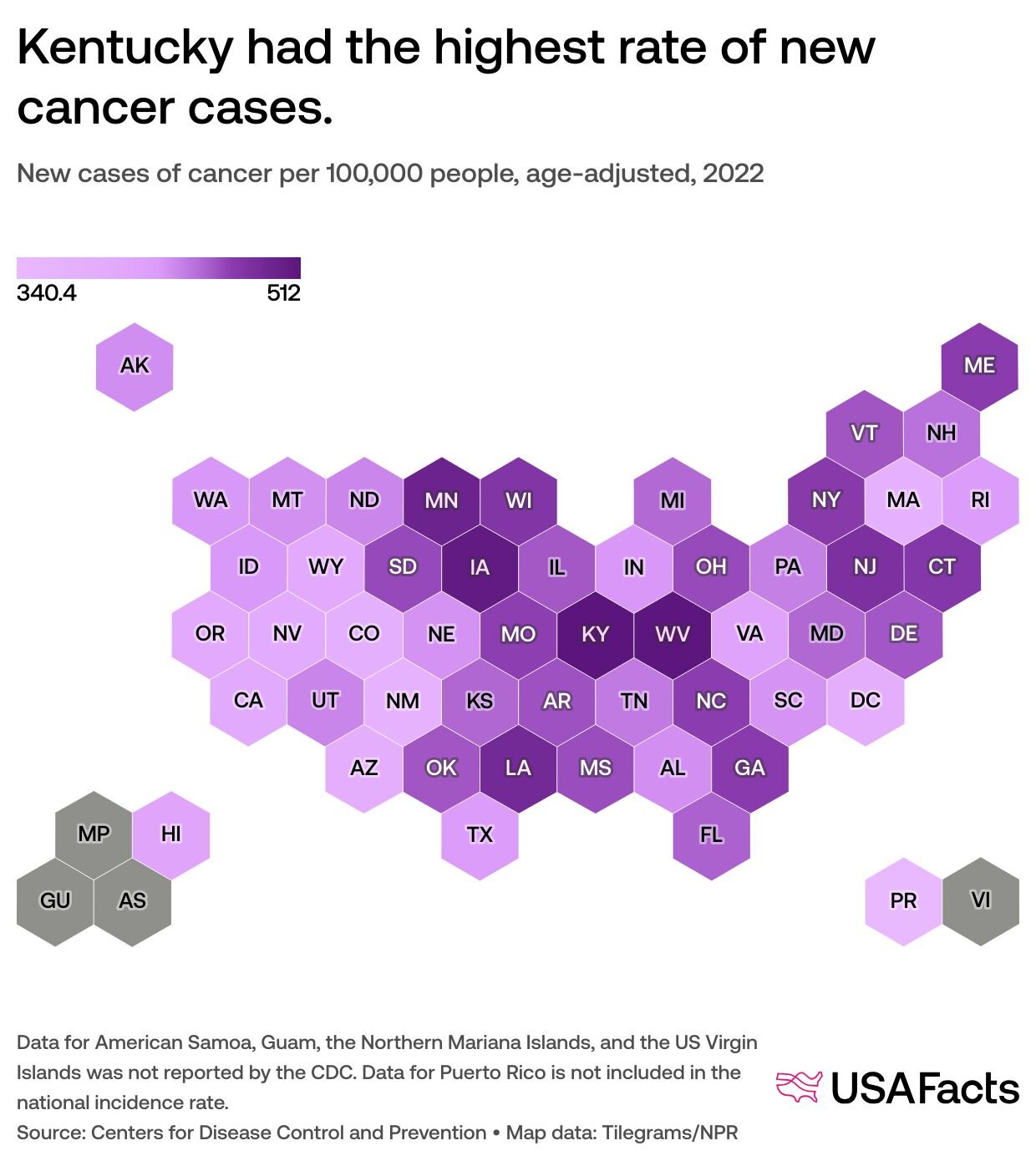
However, a study comparing elderly Puerto Ricans with elderly Hispanic populations living in states found that late stage diagnoses and limited health care access led to a higher mortality rate in Puerto Rico. Elderly cancer patients in the states were more likely to receive life-saving care in the form of early intervention and successful treatment. Since the population of Puerto Rico is aging, this is important.
A 2025 study that focused on colorectal cancer in particular found that Puerto Rico showed the lowest 5-year survival rate for early onset colorectal cancer. This and other studies indicate that, while Puerto Rico’s overall incidence of new cancer diagnoses and mortality rate for existing cases are not out of range in comparison with the states, some specific situations show how the limitations of the healthcare system leave Puerto Ricans more vulnerable than Hispanic Americans living in the states.
Working to improve
Governor Jenniffer González-Colón signed a new Executive Order last month calling for a feasibility study on a Pilot Clinical Research Program for Emerging Therapies. This initiative would encourage and oversee controlled clinical trials on the Island, ensuring that Puerto Rico’s strength in biosciences will be used safely in the development of new therapies, which may include new treatments for cancer.
“Scientific innovation represents an opportunity to transform the future of Puerto Rico’s healthcare system,” the governor said. “Our responsibility is to prepare the Island to participate in the research that will define tomorrow’s treatments, always with the highest standards of scientific rigor, ethics, and regulatory compliance. Through this Executive Order, we are moving toward making Puerto Rico a leader in clinical research and opening new opportunities for our patients, researchers, healthcare professionals, and veterans.”
For cancer in particular, patients have long had to wait as much as two months to begin cancer treatment under Medicaid. A new directive will allow patients to start testing and treatment immediately while the paperwork makes its way through the approval process.
VOCES Immunization and Health Promotion Coalition in Guaynabo and Migrant Clinicians Network in San Juan are two organizations on the Island which are working to improve early detection and treatment of cancer in Puerto Rico. Each received grants of $100,000 from the Prevent Cancer Foundation.